


The UNFPA Return-on-Investment Tool (ROI-T) was developed by UNFPA APRO in collaboration with Good Business Lab to support businesses and private sector stakeholders to meaningfully contribute to improving the health and well-being of their employees, by demonstrating the economic and financial impacts of implementing SRHR programmes in the workplace.
By using the ROI-T, companies can estimate the return-on-investment for implementing a range of SRHR programmes in their own workplaces, if these programmes achieved similar health and business improvements in terms of productivity, absenteeism and staff turnover as evidenced in available academic literature and studies.
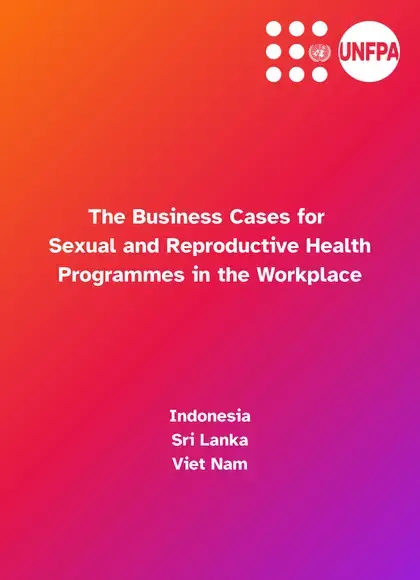
These case studies highlight the key potential outcomes of Sexual and Reproductive Health & Rights (SRHR) interventions and programmes implemented at participant companies, illustrated using the UNFPA Return-on-Investment Tool (ROI-T).
Read the full case studies:
This business case – developed in collaboration with Better Work Indonesia – explores the expansion of the current SRHR interventions and programmes developed by Hop Lun in the country, leveraging the ROI-T to estimate the potential returns of implementing two additional SRHR-related workplace programmes.
This case study explores the experience of MAS Holdings (MAS) with implementation of SRHR programmes in Sri Lanka, while leveraging the ROI-T to estimate the potential returns of the expansion on some of these programmes to one of the group’s factories in India.
This business case, developed in collaboration with MSI Reproductive Choices in Viet Nam (MSIVN), illustrates the estimated benefits linked to ongoing SRHR training, services and products, being provided by SEVT, leveraging the research backing the ROI-T to estimate the potential impact that these programmes might have had on key performance metrics, such as productivity, absenteeism and staff turnover.
About the programme:
The UNFPA Asia and the Pacific Regional Office (APRO) Workplace Access to Sexual and Reproductive Health and Rights (SRHR) programme, part of the UNFPA-led Coalition for Reproductive Justice in Business, demonstrates to businesses and private sector actors that they can become agents of change by expanding access to sexual and reproductive health services and ensuring that more women have the means to realise their sexual and reproductive rights, while still obtaining positive economic and business returns.