

Systemic Barriers Threaten Midwives
Despite their proven impact, a lack of investment prevents midwifery from reaching its full potential. To achieve this, significant changes are needed in education policies, how midwives are deployed, and relevant retention strategies.
In addition, ensuring an enabling environment for midwifery care - focusing on promoting the full scope of practice for midwives, as well as ensuring health providers’ wellbeing and leadership opportunities - is crucial to support the midwifery profession in this region and globally.
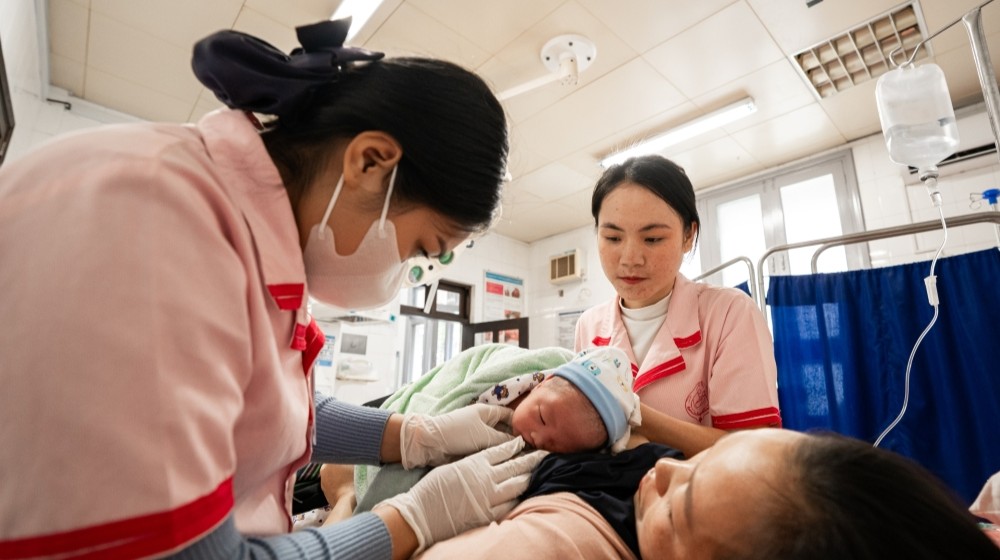
The midwifery workforce in Asia and the Pacific faces serious challenges that could reverse progress in maternal health, as highlighted in the State of Asia’s Midwifery 2024 Report.
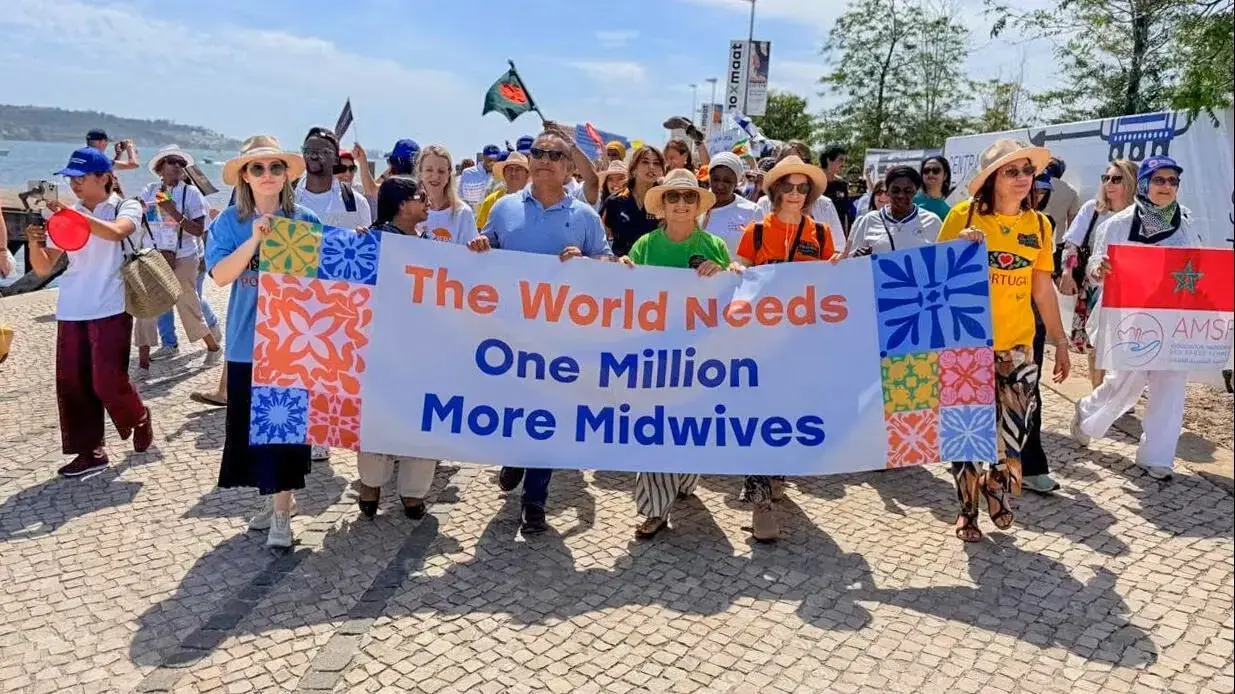
Globally, there’s a critical shortage of 900,000 midwives needed to meet the demand by 2030. This critical shortfall is worsened by chronic underinvestment and systemic barriers. This leads to professional marginalization and poor working conditions for this predominantly female profession, as 90 per cent of the global midwifery workforce are women who may face gender discrimination, biases, and stigma.
In many countries, the lack of strong regulations lead to confusion when the term "midwife" is used without the required international training standards. A lack of strong, evidence-based policy and the absence of midwife leaders in national discussions, prevents midwives from using their full skills, denying millions of women access to the crucial care they need to survive and thrive.
UNFPA’s Work: Strengthening Policy and Investments
Midwifery Accelerator 1: Policy and Regulation
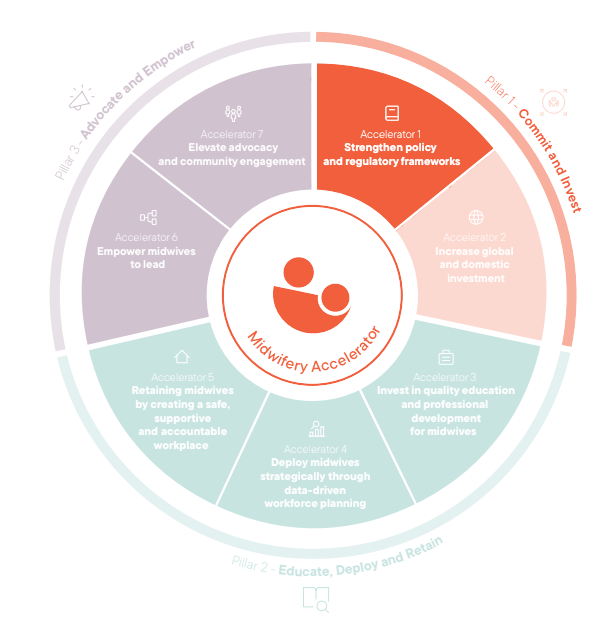 |
UNFPA in Asia and the Pacific works to strengthen the professional standing of midwives by helping countries analyze and close gaps between regional midwifery regulatory policies and international standards for midwifery education standards and continuous professional development. |
Midwifery Accelerator 2: Increase Investment
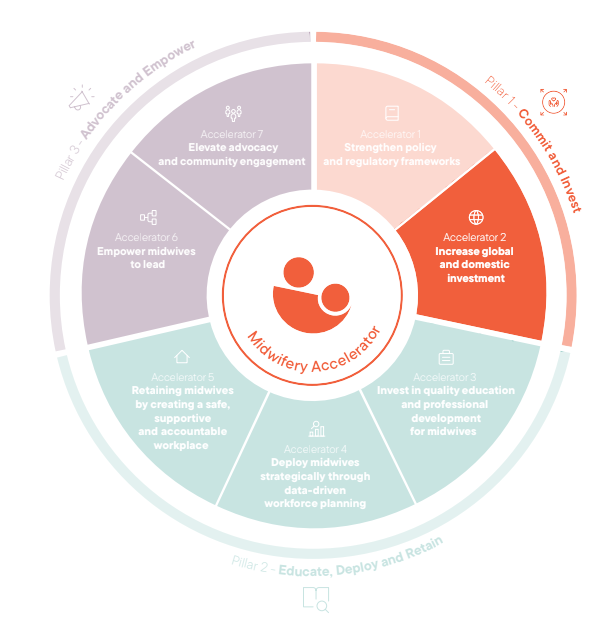 |
To secure crucial funding and domestic resources allocation by national governments, UNFPA promotes key tools for investment advocacy. This involves using resources such as the Developing Investment Cases for Transformative Results toolkit to demonstrate the benefits of investing in maternal health, especially through a stronger and expanded midwifery workforce. |
UNFPA’s Work: Improving Midwife Education, Deployment and Retention
Midwifery Accelerator 3: Midwifery Education
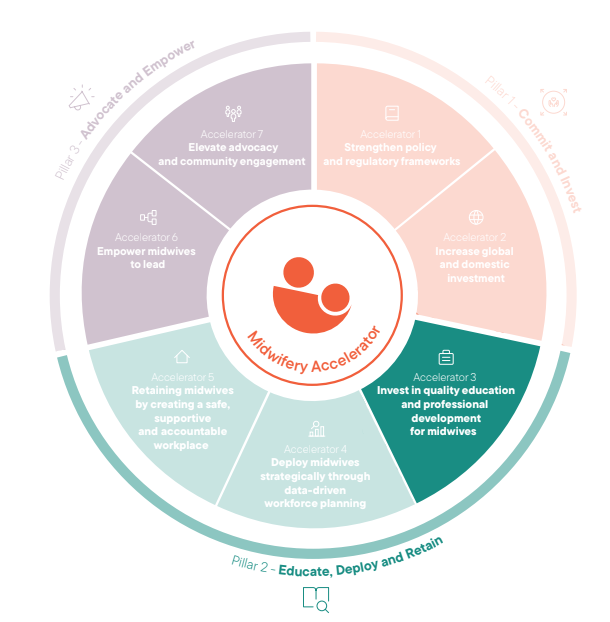 |
UNFPA in Asia and the Pacific works to build a skilled midwifery workforce through education that meets international standards. This is achieved by: Faculty Development: The UNFPA APRO Midwifery Faculty Development Programme (FDP) directly increases the ability of midwifery educators across the region to develop and strengthen midwifery curricula and training, in line with international standards.. The FDP helps build competence in midwifery faculty, recognizing that well-trained midwives come from knowledgeable teachers. |
Curriculum Alignment: UNFPA in Asia and the Pacific ensures national training programmes align with international standards by actively supporting midwifery curricula reviews and development activities. This includes utilizing the ICM Model Curriculum Outlines to improve understanding and skills in midwifery education.
Targeted CPD: UNFPA provides specific guidance for Continuing Professional Development (CPD) for midwives to maintain necessary skills throughout their careers, ensuring high-quality, respectful care for women and newborns in Asia and the Pacific region. This comprehensive framework aligns learning activities with the ICM essential competencies and the ‘survive, thrive, and transform’ approach.
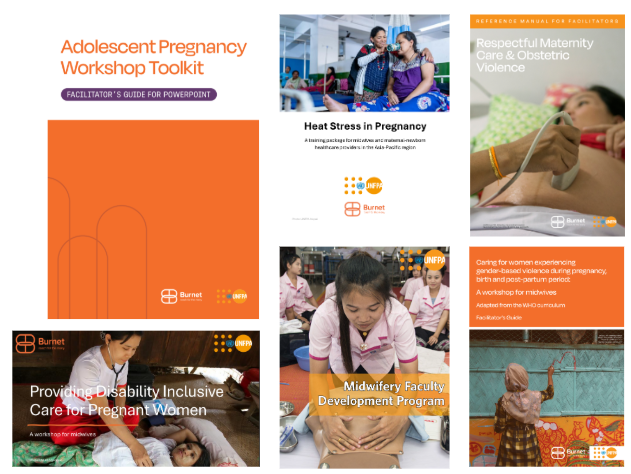
UNFPA APRO has also developed a number of training resources aimed at in-service midwives, which focus on a range of different skills and issues that the midwives might encounter during their practice. These training resources include, among others:
- Respectful Maternity Care and Obstetric Violence
- Disability Inclusive Maternal Health Care
- Caring for Pregnant Adolescents
- Perinatal Mental Health
- Heat Stress in Pregnancy
- Emergency Obstetric and Newborn Care (EmONC) Trainings
- Providing care to women subject to Gender-Based Violence (GBV)
Midwifery Accelerator 4: Strategic Deployment
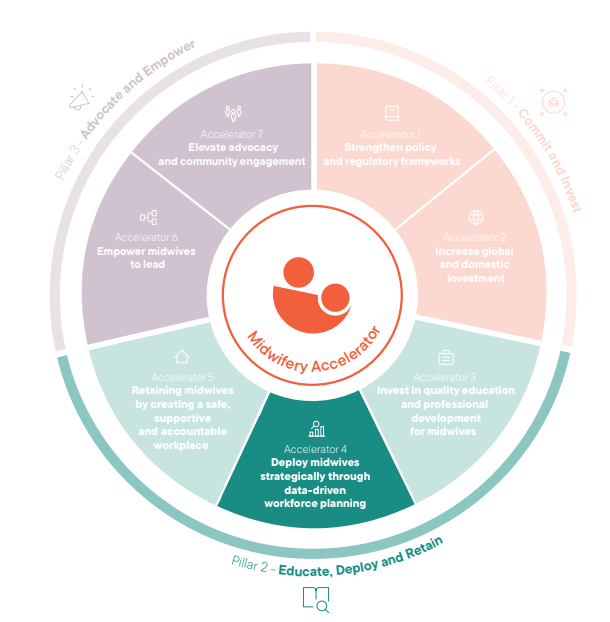 |
UNFPA in Asia and the Pacific is committed to ensuring midwives are placed where they are most needed, using evidence to guide decisions on midwives’ distribution, resource allocation and retention incentives. Regional Reports: The State of Asia’s Midwifery 2024 Report provides a regional overview and analysis of how many midwives are available and where they are working. Global Reports: This work is compared against the global State of the World’s Midwifery 2021 (SoWMy 2021) report. |
System Strengthening: UNFPA supports strengthening national data systems to plan for the midwifery workforce more effectively. This involves using advanced health data systems such as:
- Health Management Information System (HMIS) and Maternal and Perinatal Death Surveillance and Response (MPDSR) to help with efficient planning and monitoring based on programmatic and health outcomes.
- Geographical Information System (GIS) technology to map and prioritize facilities, aiming to ensure fair access to quality Emergency Obstetric and Newborn Care (EmONC) within two hours of travel for all pregnant women.
- Using data and analysis to inform how resources are allocated and planned, including providing essential services like the Minimum Initial Service Package (MISP) for sexual and reproductive health in humanitarian crisis settings.
Midwifery Accelerator 5: Empowering Workplaces
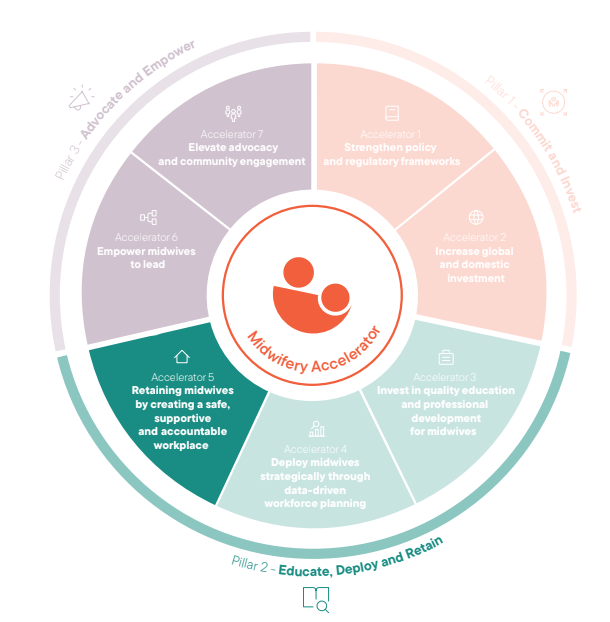 |
The goal is simple: to keep midwives in their profession and ensure they provide high-quality care by creating safe, supportive and accountable work environments. |
Safe, Respectful and Well-Resourced Workplaces: UNFPA works to end mistreatment and promote a no-blame culture. This includes promoting Respect Maternity Care (RMC) through training and implementing global guidance and expanding the understanding of wellbeing for women in UNFPA’s new RMNCAH strategy and with WHO’s new guidance on defining and supporting maternal wellbeing.
Strengthening Midwives’ Retention: Investing in ongoing learning and crucial support for new graduates is vital for keeping midwives in the profession. This includes improving training and education resources, but also focusing on supportive environment for midwives’ work, such as the:
- Transition to Practice Programme (TTP): Implementing programs like the Midwifery Preceptorship Programme in countries like Cambodia and Lao PDR to provide essential mentorship and clinical support for new graduates.
Accountability and Fair Policies: UNFPA drives systemic policy and leadership change by promoting policies on fair pay, work-life balance, gender equality, and involving midwives in accountability mechanisms.
Interprofessional Respect: UNFPA supports the implementation of Midwifery Models of Care (MMoC), which require a shift toward integrated and collaborative care built on equality, trust and mutual respect among interdisciplinary teams. UNFPA’s programs include modules on communication and teamwork designed to encourage open, constructive dialogue and psychological safety to overcome institutional hierarchies in the workplace and work towards creating an enabling environment for all midwives and maternal and newborn health providers.
UNFPA’s Work: Empowering Midwife Leaders
Midwifery Accelerator 6: Midwives in Leadership
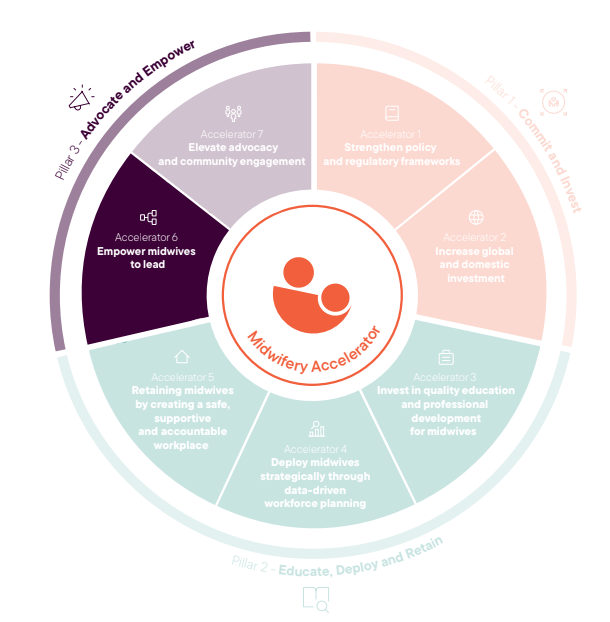 |
This accelerator aims to build leadership at all levels - clinical, academic, and policy - to strengthen health system governance and ensure midwives have a voice where it matters most. UNFPA in Asia and the Pacific fosters leadership primarily through the Faculty Development Programme (FDP). This program develops capabilities in midwifery educators and potential leaders through modules focusing on:
|
Midwifery Accelerator 7: Advocacy
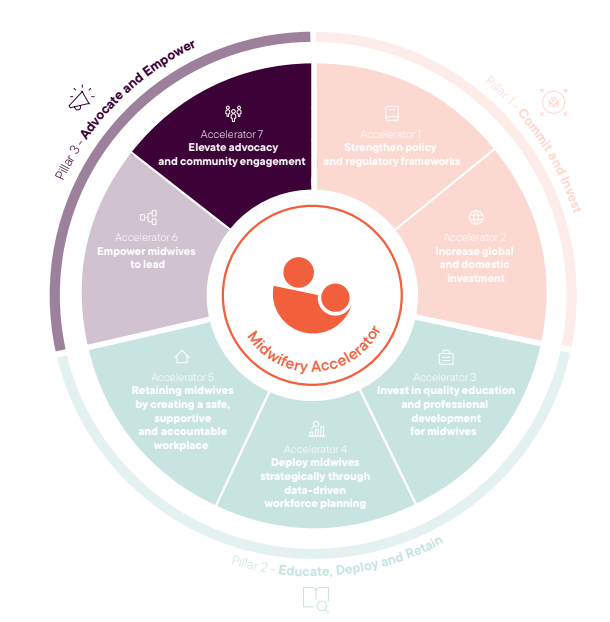 |
UNFPA in Asia and the Pacific works to amplify the voices of women and communities to increase demand for quality care, focusing on comprehensive, rights-based advocacy: Rights-Based Advocacy: UNFPA promotes a rights-based approach to care, which emphasizes that mistreatment is a human rights violation. |
Addressing Vulnerability: Advocacy targets marginalized groups, including young women and women with disabilities, ensuring their unique needs are addressed.
Climate Change: The escalating climate crisis and extreme heat pose severe threats to maternal and newborn survival. UNFPA aims to strategically strengthen health systems and position midwives as frontline climate responders.
UNFPA’s work includes:
- Heat Stress in Pregnancy training package to equip midwives with skills to manage heat-related illnesses and adapt clinical protocols during extreme weather events.
- Publications like ‘Taking Stock: Sexual and Reproductive Health and Rights in Climate Commitments’, which further prepares midwives for effective action in humanitarian and crisis settings.
UNFPA’s Powerful Partners
UNFPA’s success is supported by strong partnerships. Technical and education partners, such as the Burnet Institute, help develop the Midwifery Faculty Development Programme and various CPD training. Professional bodies like the International Confederation of Midwives (ICM) ensure high education standards, while the International Federation of Gynecology and Obstetrics (FIGO) advocates for increased interprofessional collaboration to deliver Maternal and Newborn Health (MNH).
Midwives: Vital for Healthy Futures
Midwives are specialized, essential health professionals, fundamental to ensuring the wellbeing of mothers and newborns. Investing in midwifery models of care (MMoC) not only saves lives but also yields significant economic and social benefits, demonstrating their indispensable role in healthcare systems worldwide.
What is a Midwife?
Skilled and supported midwives are central to global health goals. By providing essential services across the entire continuum of care, from pre-pregnancy through the postnatal period, midwives are equipped to deliver 90 per cent of all essential sexual, reproductive, maternal, newborn, and adolescent health services (SRMNCAH). This focus dramatically improves outcomes and could avert approximately 67% of maternal deaths, 64% of newborn deaths, and 65% of stillbirths, resulting in the saving of 4.3 million lives per year.
UNFPA’s Strategy in Asia and the Pacific
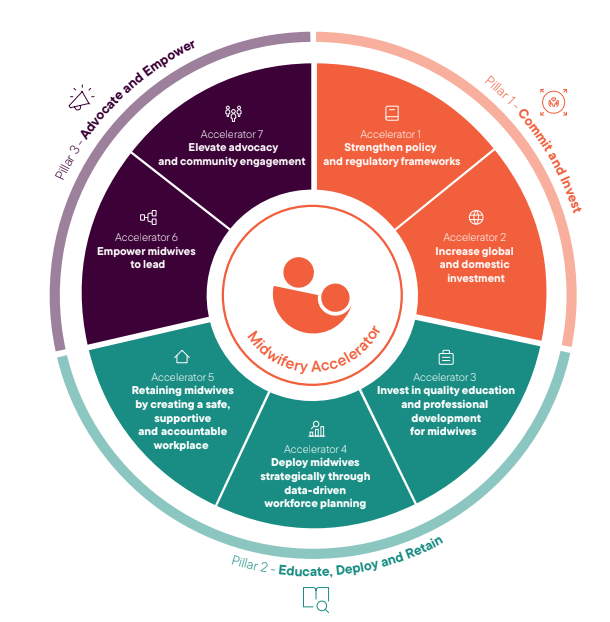
UNFPA in Asia and the Pacific is committed to advancing maternal and newborn health through initiatives like the Midwifery Accelerator. The Accelerator is a framework organized around three pillars - commit and invest; educate, deploy and retain; and advocate and empower - to fully integrate MMOC into health systems.
Efforts are supported by key regional and global evidence generation and knowledge-sharing, , enhanced by South-South learning, and supported by a comprehensive Midwifery Dashboard.
Essential resources guiding UNFPA’s work include:
- State of Asia’s Midwifery 2024 Report
- State of the World’s Midwifery 2021 (SoWMy 2021)
- Every Woman Every Newborn Everywhere (EWENE) partnership