

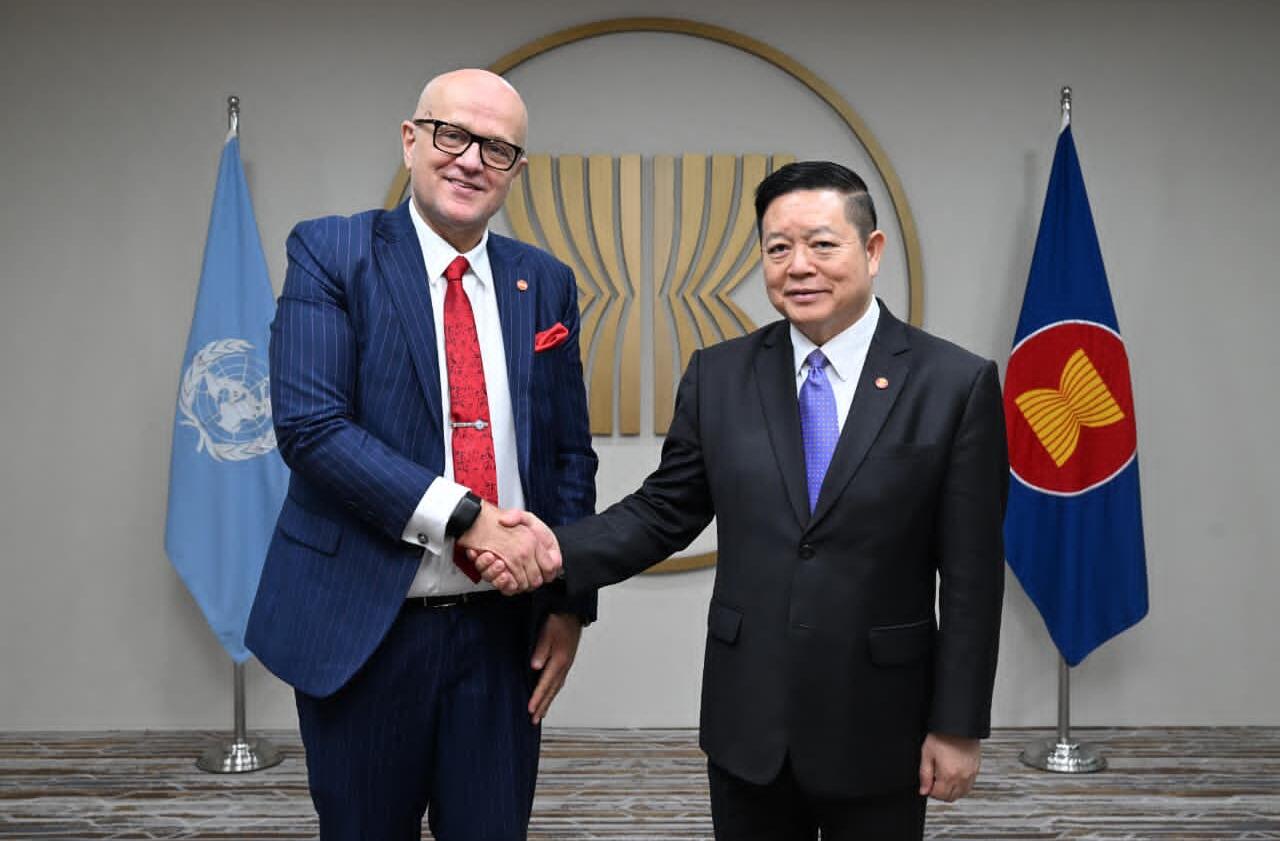
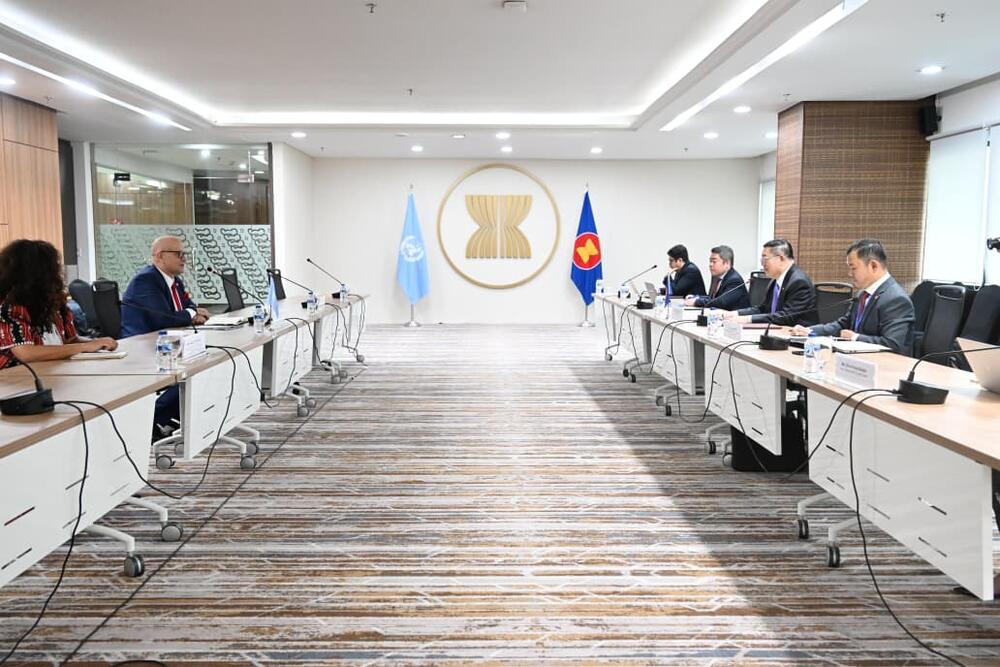
Jakarta, 24 February 2026 — The United Nations Population Fund (UNFPA) reaffirmed its strategic partnership with the Association of Southeast Asian Nations (ASEAN) during a high-level meeting between Dr. Aleksandar (Sasha) Bodiroza, Regional Director a.i. of UNFPA Asia and the Pacific, and H.E. Dr. Kao Kim Hourn, Secretary-General of ASEAN, at the ASEAN Secretariat in Jakarta.
The meeting underscored a shared commitment to advancing inclusive demographic transformation across Southeast Asia, with particular focus on population ageing, youth empowerment, gender equality, and maternal health. Discussions centred on strengthening collaboration under the ASEAN Socio-Cultural Community pillar and aligning efforts with ASEAN Community Vision 2025 and emerging Post-2025 priorities.
Both leaders emphasized the importance of positioning demographic change as a driver of sustainable and inclusive growth. As ASEAN Member States navigate varying stages of population ageing, regional cooperation will be critical to ensuring that policies promote wellbeing, productive longevity, and equitable access to opportunities.
UNFPA reiterated its commitment to providing technical assistance to ASEAN and its Member States in shaping policies, programmes, and financing mechanisms that enable older persons to live healthy, active, and productive lives.
“Demographic change is one of the defining transformations of our time,” said Dr. Bodiroza. “Our cooperation with ASEAN reflects a shared understanding that population ageing is not merely a challenge to manage, but an opportunity to unlock human potential. By working together, we can ensure that longevity translates into wellbeing, productivity, and inclusion for all.”
Secretary-General Dr. Kao Kim Hourn’s leadership in advancing regional dialogue on demographic shifts and inclusive development was recognized as central to strengthening ASEAN’s convening role and policy coherence across Member States. The meeting marked another step in deepening UNFPA–ASEAN collaboration to ensure that demographic transitions contribute to resilient communities, stronger social protection systems, and sustainable economic growth throughout the region.
For interviews or more information:
Katie Elles (Bangkok): elles@unfpa.org, +66 80 043 0525
About UNFPA: www.unfpa.org
About UNFPA’s work in Asia and the Pacific: asiapacific.unfpa.org