

Seoul, Republic of Korea, 3 December 2025 – The United Nations Population Fund (UNFPA) and the Ministry of Data and Statistics of the Republic of Korea (MODS) sent an urgent call to turn demographic anxieties into demographic resilience while emphasizing the pressing need to reframe the way older persons and their contributions to society are seen and valued. At the 9th edition of the Global Symposium on Low Fertility and Ageing, held in Seoul, Republic of Korea from 2-3 December, the longstanding partners also warned against sacrificing hard-won advances in empowering individuals with access to rights and choices to misguided attempts at engineering population sizes or composition.
Under the theme ‘Rethinking old-age dependency and the engagement of older persons’, experts focused on challenges faced by countries at different stages of the demographic transition. In a world where all countries are on the path to an older population, it was also emphasized that ageing is a gendered process which reflects inequalities accumulated throughout life. Women everywhere might live longer than men but too often receive less recognition and resources. They disproportionately bear the burden of unpaid care, endure substantial income and pension shortfalls, and are more likely to experience longer periods of poor health and disability.
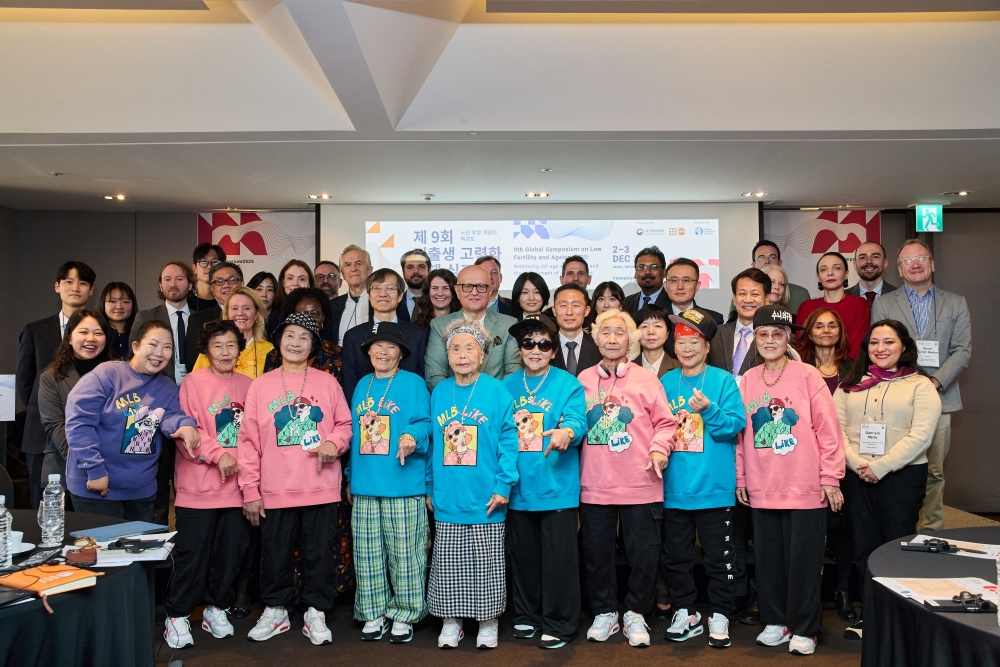
"Older persons" of all genders still too often find themselves excluded and ostracized even as they significantly further the wellbeing of families and communities. Others who might be considered ‘dependents’, are in fact contributing monetarily and non-monetarily to help societies thrive. It is urgently needed to rethink existing definitions of old age and ensure viable social and economic systems that have the power to build a new intergenerational social contract which provides opportunities for young and old alike. These must focus on the engagement of older persons in economy and society as well as the different types of support and benefits extended to older persons.
“Together, we can build a future where everyone, at every age, is empowered to thrive, contribute, and live a healthy, fulfilled and dignified life. A future where demographic change is met not with anxiety, but with innovation, solidarity, and shared purpose,” said Pio Smith UNFPA’s Deputy Executive Director - Programme a.i. in his opening remarks.
The two-day event brought together experts from around the world in the capital of the Republic of Korea. It was the 9th edition of the yearly event which was first held by the Korean Government and UNFPA in 2017. Ever since, the partners pioneered policy discussions and outcome-focused exchange in the area of low fertility, ageing and demographic resilience, with the Republic of Korea consistently making important strides to demonstrate how rights-based, evidence-driven policy can transform demographic challenges into opportunities.
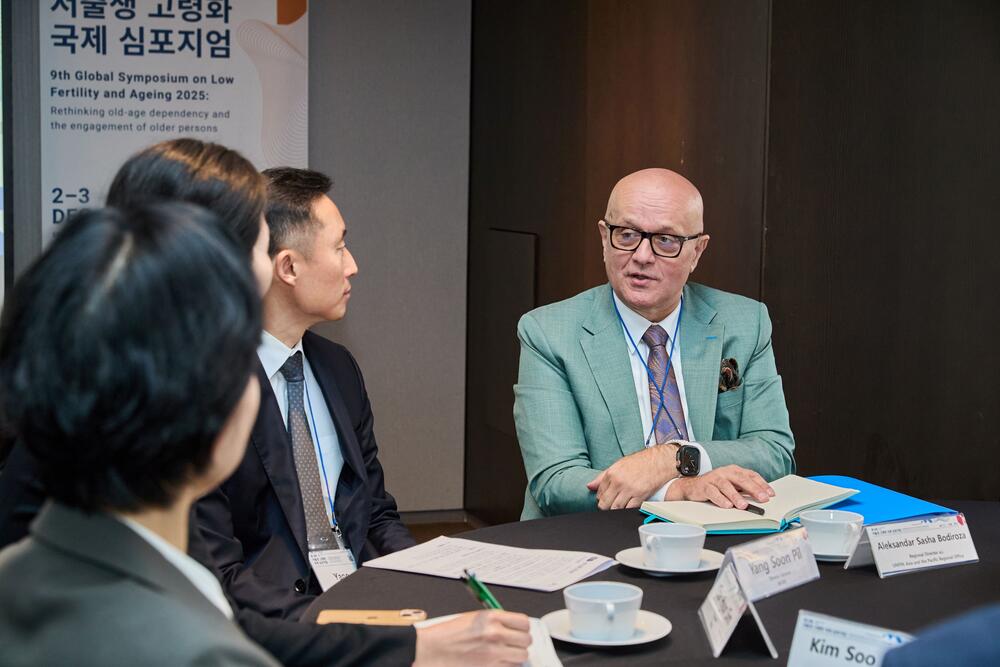
“The issue of an ageing population is not a challenge for one country alone, but a structural change which the entire world is experiencing simultaneously, though at different speeds and in different ways. We believe that better solutions can emerge when we share policies and experiences and build solidarity,” said Yang Soon Pil, Director General of the Ministry of Data and Statistics.
Turning demographic anxiety into resilience must always start with data. As the custodian of the census and tasked with strengthening national data systems worldwide, UNFPA, the UN’s lead agency on population dynamics and demographic resilience, is uniquely positioned to combine data excellence with a critical rights-based perspective to matters of demographic change, grounded in gender equality and a special focus on the lived realities of women and girls. The organization has now integrated a fourth outcome on population dynamics and demographic change in their new strategic plan, focusing on supporting countries to understand, adapt to and shape their demographic futures by supporting the rights and choices of all.
For press inquiries please contact:
Katie Elles elles@unfpa.org
Etienne Leue leue@unfpa.org