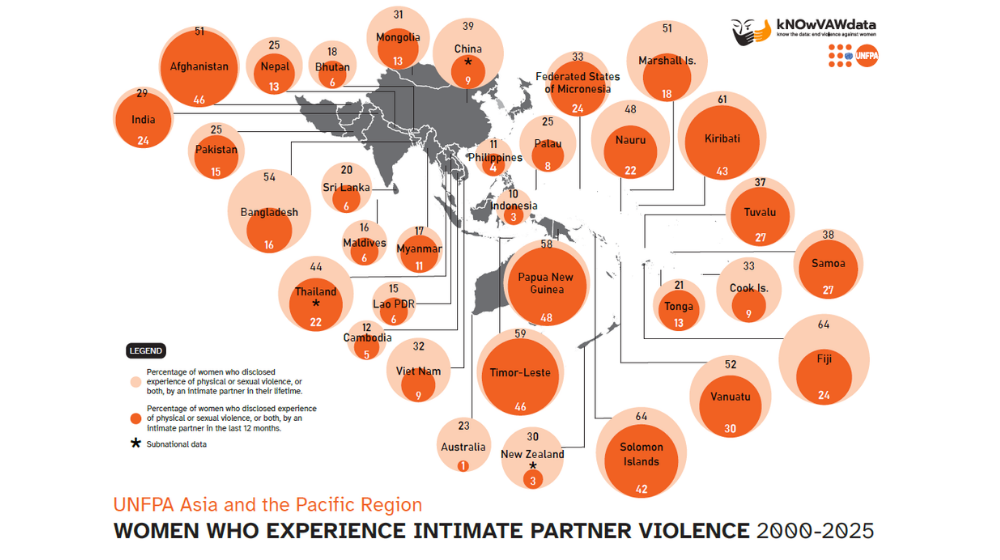


Across Southeast Asia, violence against women and girls continues to take many forms — at home, online, in political life, during emergencies and displacement. Nearly a decade after ASEAN adopted its first Regional Plan of Action on the Elimination of Violence against Women (RPA EVAW), the region is now preparing the next chapter.
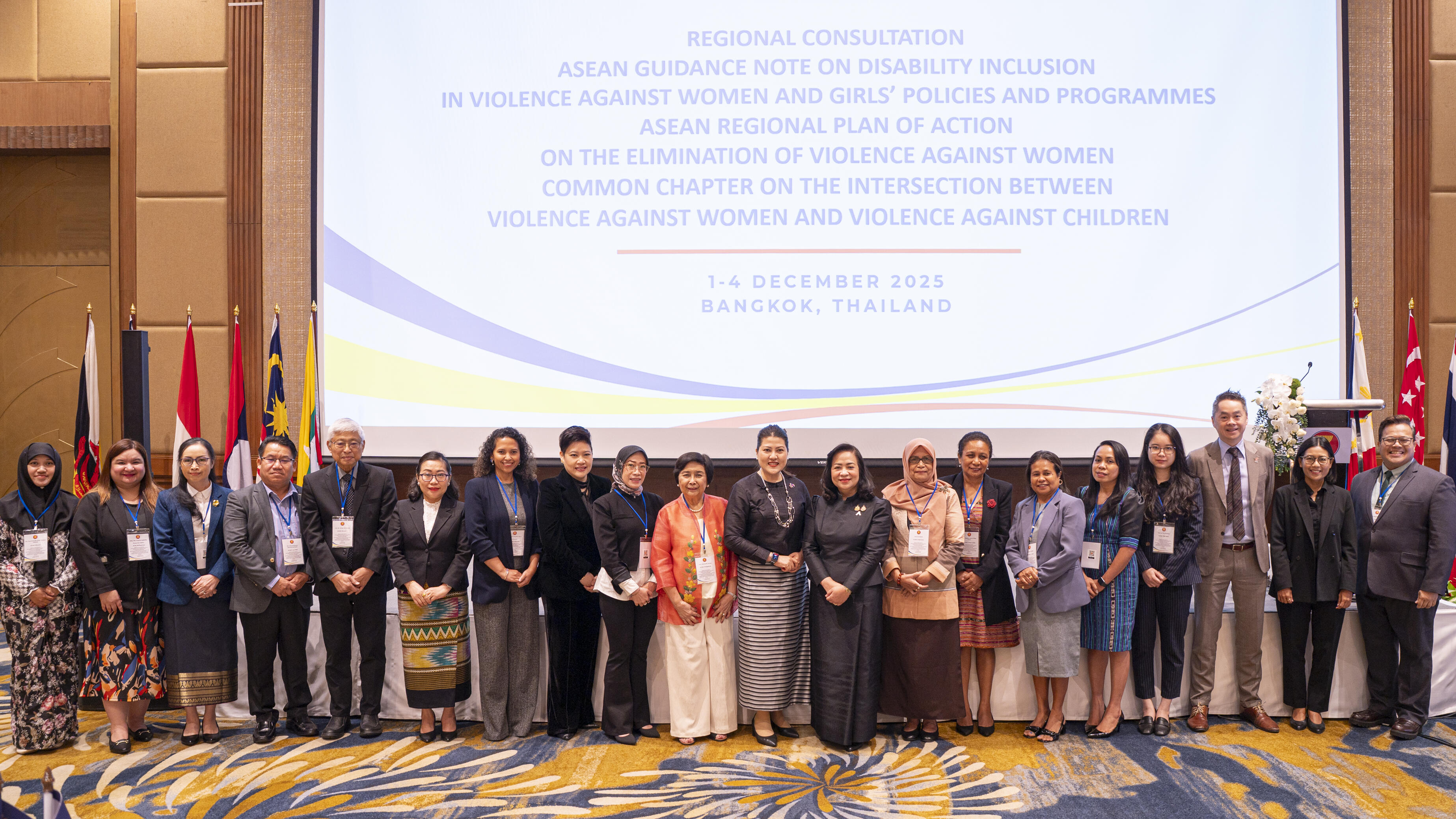
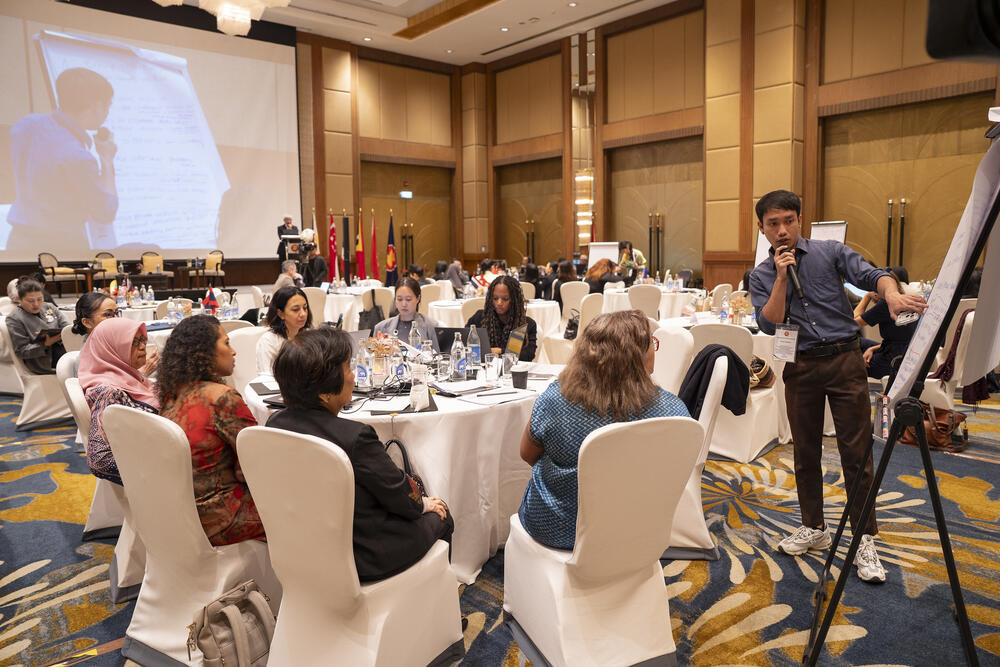
From 1–4 December 2025, representatives from ASEAN Member States gathered in Bangkok to shape the Regional Plan of Action for 2026–2035. The consultation marked the culmination of an extensive review process, looking back at ten years of progress while confronting the unfinished work ahead.
Reflecting on a decade of action
The current RPA EVAW (2016–2025) provided ASEAN with its first coordinated regional framework to prevent and respond to violence against women. As the plan approaches its conclusion, Member States undertook a comprehensive end-term review to assess achievements, identify persistent gaps and respond to emerging risks.
National consultations were convened in Brunei Darussalam, Cambodia, Indonesia, Lao PDR, the Philippines, Thailand and Viet Nam. Led by national governments and representatives to the ASEAN Committee on Women (ACW) and the ASEAN Commission on the Promotion and Protection of the Rights of Women and Children (ACWC), these discussions created space for governments, sectoral bodies and civil society to reflect candidly on what has worked and what must evolve.
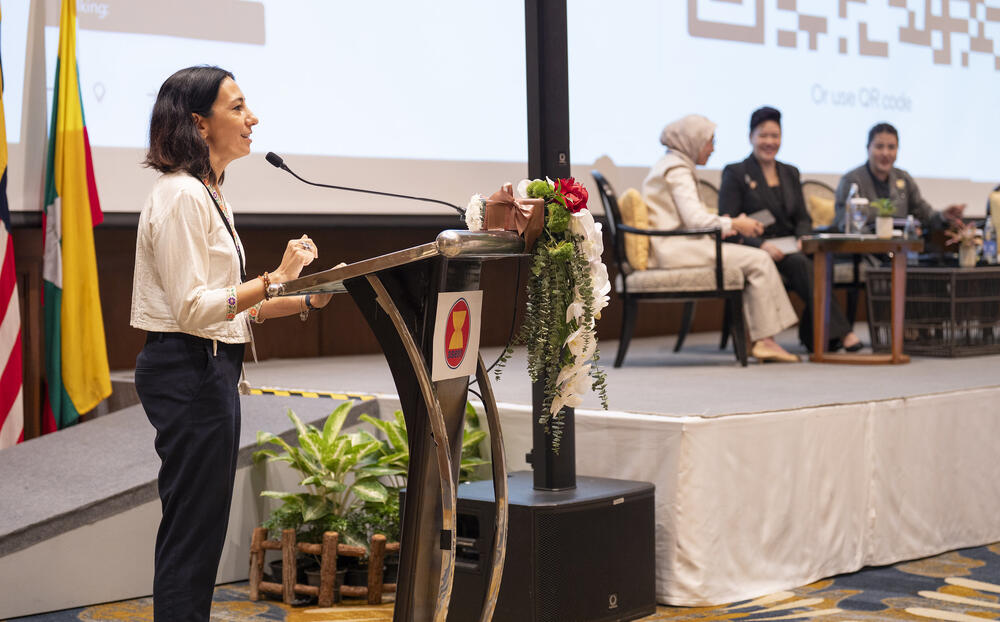
“The review of the ASEAN RPA on EVAW has shown both our progress and the work that remains,” said Ratchada Jayagupta, ACWC Representative for Thailand, at the opening of the regional consultation. “As we prepare the next RPA, we have a clear responsibility to build a practical framework that is grounded in evidence and responsive to the needs of women and girls across all ASEAN Member States.”
Emerging risks demand stronger coordination
While important gains have been made over the past decade, the regional consultation underscored the rapidly shifting landscape of violence. Participants identified several cross-cutting challenges that require stronger coordination across ASEAN, including technology-facilitated violence such as online harassment and abuse, violence in emergencies and disaster contexts, violence in politics and public life, and violence affecting migrant women and women and girls with disabilities. Member States emphasized the need to strengthen prevention efforts, improve safeguarding systems, and enhance coordination across justice, health and social services. They also called for stronger investment in reliable data and research systems to better understand patterns of violence and measure impact. These discussions signal a shift in focus from isolated interventions toward more integrated and systemic approaches.
From response to prevention at scale
A central theme of the consultation was the growing body of evidence showing that violence can be prevented if prevention is planned, funded and implemented at scale.
“Violence can be reduced when prevention is planned, funded and implemented at scale,” said Melissa Alvarado, Regional Programme Manager for Ending Violence against Women at UN Women’s Regional Office for Asia and the Pacific. “This means addressing harmful norms, strengthening institutions, and ensuring that prevention is not treated as a stand-alone activity but as a core part of national and regional policies.”
This emphasis reflects an important evolution in the regional agenda. Prevention is no longer viewed as supplementary; it is increasingly understood as central to long-term change.
Disability inclusion moves to the forefront
The consultation also reviewed the draft ASEAN Guidance Note on Disability Inclusion in Violence against Women and Girls’ Policies and Programmes. Developed through a two-year consultative process led by ACWC and the Senior Officials Meeting on Social Welfare and Development representatives for Thailand, with support from UNFPA, the guidance note aims to address persistent barriers faced by women and girls with disabilities.
For many participants, this represents a critical step toward ensuring that violence prevention and response systems are accessible and inclusive.
“The ASEAN Guidance Note provides Member States with a strategic roadmap to dismantle systemic barriers by institutionalizing disability inclusion across national prevention, protection and justice frameworks,” said Sujata Tuladhar, Gender-based Violence Technical Advisor at UNFPA’s Regional Office for Asia and the Pacific. “It ensures that both violence prevention efforts and survivor-centred services are accessible to all women and girls.”
Bridging violence against women and violence against children
Another key discussion focused on the forthcoming Common Chapter exploring intersections between violence against women and violence against children. The chapter will be included in both the upcoming RPA EVAW and the Regional Plan of Action on the Elimination of Violence against Children.
Participants highlighted opportunities for more coordinated prevention and response mechanisms, while recognizing that specialized systems remain essential to address the distinct needs of women and children.
This effort signals ASEAN’s intention to align policy frameworks more closely and strengthen cross-sector collaboration.
A shared roadmap for 2026–2035
The Bangkok consultation brought together national insights into a shared regional vision. Hosted by ASEAN, with support from Thailand’s Ministry of Social Development and Human Security, ACWC Thailand, the Chulalongkorn University Institute of Asian Studies and the Canada Fund for Local Initiatives, and supported by UN Women and UNFPA through the Australia-funded UN Joint Programme on Gender-Based Violence Prevention in Southeast Asia, in collaboration with UNICEF, the meeting marked a pivotal moment in shaping ASEAN’s next decade of action.
The finalized Regional Plan of Action on the Elimination of Violence against Women (2026–2035) is expected to be endorsed at the ASEAN Summit in 2026.
If adopted, it will serve as ASEAN’s most comprehensive regional roadmap to date, strengthening prevention, reinforcing protection systems, improving data and accountability, and ensuring that the region’s response evolves alongside emerging risks.
As ASEAN moves toward the next decade, the message from Bangkok was clear: progress has been made, but sustained political will, coordinated action and scaled investment will determine whether violence against women and girls is meaningfully reduced across Southeast Asia.