
 Go Back
 Go Back
Go Back
Go Back
Go Back
Go Back
-
Ending unmet need for family planning
Ending maternal mortality
Ending gender-based violence and harmful practices
Responding to population matters
Ensuring rights and choices for all

Resources Listing Page VAW Page
Resources Listing Page VAW Page
15 August 2023
Fact Sheet
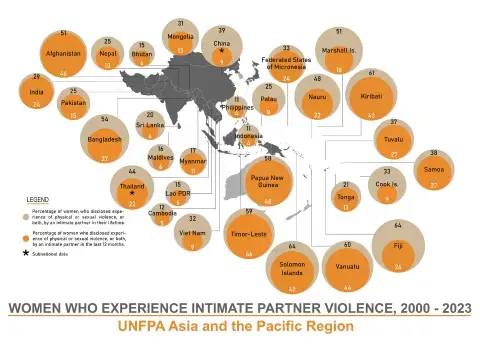
Violence Against Women - Regional Snapshot (2023) - kNOwVAWdata
This 2023 snapshot is the seventh annual edition of this publication. The data reflect the most recent data collected with either the WHO methodology, the DHS-DV (domestic violence) module, or the UNECE VAW module. The data in this publication are sourced from publicly available survey reports, as of August 2023.
Read story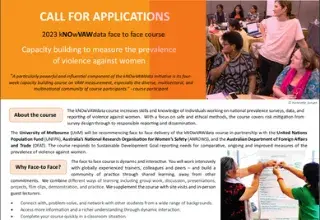
23 May 2023
Resource
2023 kNOwVAWdata face to face course: Capacity building to measure the prevalence of violence against women
The kNOwVAWdata course increases skills and knowledge of individuals working on national prevalence surveys, data, and reporting of violence against women. With a focus on safe and ethical methods, the course covers risk mitigation from survey design through to responsible reporting and dissemination. The University of Melbourne (UoM) will be recommencing face to face delivery of the kNOwVAWdata course in partnership with the United Nations Population Fund (UNFPA), Australia’s National Research Organisation for Women’s Safety (ANROWS), and the Australian Department of Foreign Affairs and Trade (DFAT). The course responds to Sustainable Development Goal reporting needs for comparative, ongoing and improved measures of the prevalence of violence against women.
Read story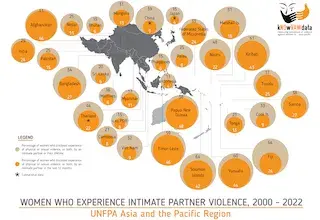
31 August 2022
Fact Sheet
Violence Against Women - Regional Snapshot (2022) - kNOwVAWdata
2022 Asia-Pacific snapshot on the prevalence of violence against women
Read story
02 February 2021
Technical Reports and Document
Prevalence Rates, Trends and Disparities in Intimate Partner Violence: Power of Data in the IPV Geospatial Dashboard
Using data from the UNFPA IPV dashboard (which offers the highest data coverage of any related source), this report features levels, trends and sociodemographic and geographic disparities, within and across countries, in intimate partner violence in the past 12 months, among ever-partnered women. Such data offer insights for evidence-based policymaking and programming, and targeted resource allocations in order to ensure no one is left behind.
Read story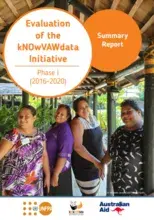
21 May 2021
Publication
Summary Report: Evaluation of the kNOwVAWdata Initiative - Phase 1
Demand for data on the prevalence of violence against women (VAW) is increasing as countries monitor their progress towards meeting Sustainable Development Goal (SDG) 5 for Gender Equality and Women’s Empowerment and other commitments such as the Convention on the Elimination of All Forms of Discrimination against Women (CEDAW). Yet, due to limited technical capacities, data on VAW prevalence are often unavailable, underused or collected in unethical, unreliable, and incomparable ways.
To address this void in ethical, reliable, and comparable VAW prevalence data across Asia and the Pacific, the kNOwVAWdata Initiative was launched in 2016 by UNFPA Asia and the Pacific Regional Office (APRO) with financial support from the Australian Government Department of Foreign Affairs and Trade (DFAT). With University of Melbourne and Australia’s National Research Organisation for Women’s Safety (ANROWS) as key partners, the kNOwVAWdata Initiative aimed to improve the availability and quality of data to inform more effective policy and programme responses to end VAW.
This report provides a summary of the evaluation of the kNOwVAWdata Initiative - Phase I.
Read story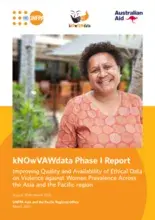
21 May 2021
Publication
kNOwVAWdata Phase I Report
Violence against women is recognized as a global public policy priority. Yet, despite growing awareness of the causes and consequences of violence against women, limited high-quality, actionable data on its prevalence exist. This gap is largely due to countries’ inadequate technical capacities to measure violence against women prevalence, meaning they rely on international experts, of whom there are not enough to meet the current and growing needs.
Collecting quality data on violence against women through special surveys is crucial if we want to understand and end this scourge. Doing so is challenging. To address this void in ethical, reliable and comparable violence against women prevalence data across Asia and the Pacific, the kNOwVAWdata Initiative was launched by the Australian Department of Foreign Affairs and Trade (DFAT) and the United Nations Population Fund (UNFPA) Asia and the Pacific Regional Office. The first phase of kNOwVAWdata operated from mid-2016 to March 2021.
This report provides the results of Phase 1 of the kNOwVAWdata initiative.
Read story
01 February 2021
Publication
Sexual Violence in Intimacy (Preview)
A preview of a fascinating new volume Sexual Violence in Intimacy (eds. Torres & Yllö, 2021), including an unprecedented analysis of violence against women prevalence data across the Pacific by kNOwVAWdata's Dr Henriette Jansen.
Read story
23 November 2020
Resource
Use and Adaptation of kNOwVAWdata Course Curriculum & Facilitator Guidebook
This document provides helpful guidance on using the kNOwVAWdata Course on the Measurement of Violence against Women materials, making adaptations for local contexts, and acknowledging the course developers when using the kNOwVAWdata course materials.
Read story
01 October 2020
Technical Reports and Document
Sri Lanka Women’s Wellbeing Survey - 2019
The 2019 Women’s Wellbeing Survey (WWS) was Sri Lanka’s first national survey on violence against women and girls, using an internationally recognized standardised methodology. The survey was carried out by the Department of Census and Statistics (DCS) with technical assistance from the United Nations Population Fund (UNFPA) and its regional kNOwVAWdata Initiative (supported by the Australian Department of Foreign Affairs and Trade (DFAT)) and funding from the Government of Canada.
Read story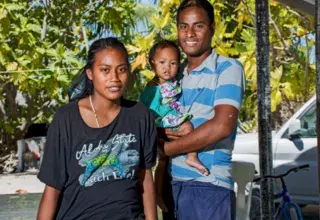
01 August 2019
Technical Reports and Document
Kiribati Social Development Indicator Survey 2018-19
The Kiribati Social Development Indicators Survey 2018/19 collected data on domestic violence (DV) by including a series of questions that were developed for the domestic violence module of the Demographic and Health Surveys. The objective of the domestic violence module is to measure the prevalence of physical, sexual and emotional violence against women and girls who are, or ever were, married or even who are, or ever have been, living with a man in an intimate relationship. The module also measures the prevalence of physical or sexual violence by perpetrators who are not spouses or cohabiting partners among women, regardless if they have or have not ever been married, since they were 15 years of age. See page 375 for data on domestic violence in Kiribati.
Read story